Why we start with market research, not with a website
A typical situation clients come to us with: the company has a website “because you need a website”, some content “because competitors do it”, and a bit of advertising. All of it was made at different times by different contractors and none of it is connected. The budget gets spent, the effect is hard to measure.
We work in the opposite order: analysis first, investment second.
What we look at during the research stage
Every project at QBENIX starts with a research stage: the niche and competitors, how target customers look for a supplier, which channels they actually use, and which spaces in search results are still free. Our team works in Vietnamese, English and Russian, so we can study the behaviour of both local customers and the foreign customers of Vietnamese companies.
One point we include in every recent report: search behaviour is changing. More and more people ask ChatGPT, Gemini or Claude directly instead of a search engine. So we check whether AI systems “see” the company and cite it. There is a dedicated service for this, the AI Visibility Audit: a score out of 100 across three areas (technical structure, source authority, level of presence) plus a roadmap for improvement.
From analysis to solutions
Research results show exactly what is missing. Based on that, we propose a set of solutions for the task, not one fixed package for everyone. Three components we implement ourselves and connect into a single system:
- Website. The foundation of digital presence: fast loading, structured data, multilingual architecture, with a target of PageSpeed 90+ on mobile. A technically correct website is not only for visitors. It is the source AI systems read and cite information about the company from.
- AI video content. Company presentations, service explainer videos, social media content. Timelines and costs suited to small and medium businesses. Video is built into the website and the channels defined during research, not produced in isolation.
- Presence on AI platforms following the roadmap from the audit. In Vietnam this approach is still new; it is usually called GEO (Generative Engine Optimization) or AEO (Answer Engine Optimization).
The three components complement each other: the website provides data for citation, video feeds the content channels, and measurements come back into the strategy.
How the process works
Five steps: research and analysis, a proposal with a detailed estimate, implementation on agreed deadlines, handover with documentation, support and measurement after the project. Every project is formalised with a contract and a full set of documents under Vietnamese law.
If you want to understand where to start in your specific case, write to us: the first conversation is always about your business, not about our services.
More articles

A cheap website costs a lot: what hides behind a 3 million VND price tag
There are plenty of "website for 3 million VND in a week" offers on the market. For a simple task it can be a reasonable option. In other cases it is the launch price, not the cost of ownership, and the difference shows up within six months to a year.
Read more
How much does a website cost in Vietnam in 2026: what drives the price
The first question in most incoming messages: "How much does a website cost?" Below we break down what makes up the price and give our reference ranges.
Read more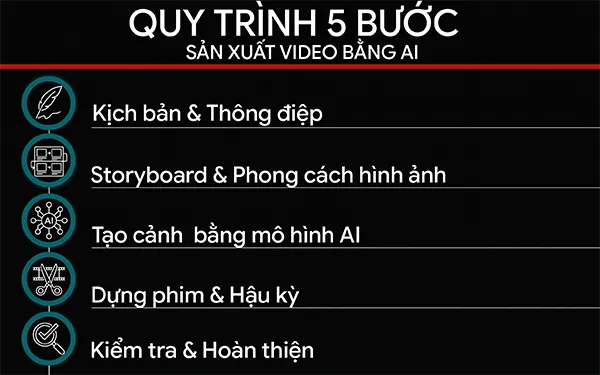
AI video for business: process, cost, and why the tool does not equal the result
The question for business is no longer "can AI make a video", but how to build the process, what it costs, and when it is appropriate.
Read more